15 Russian streamers banned on Twitch
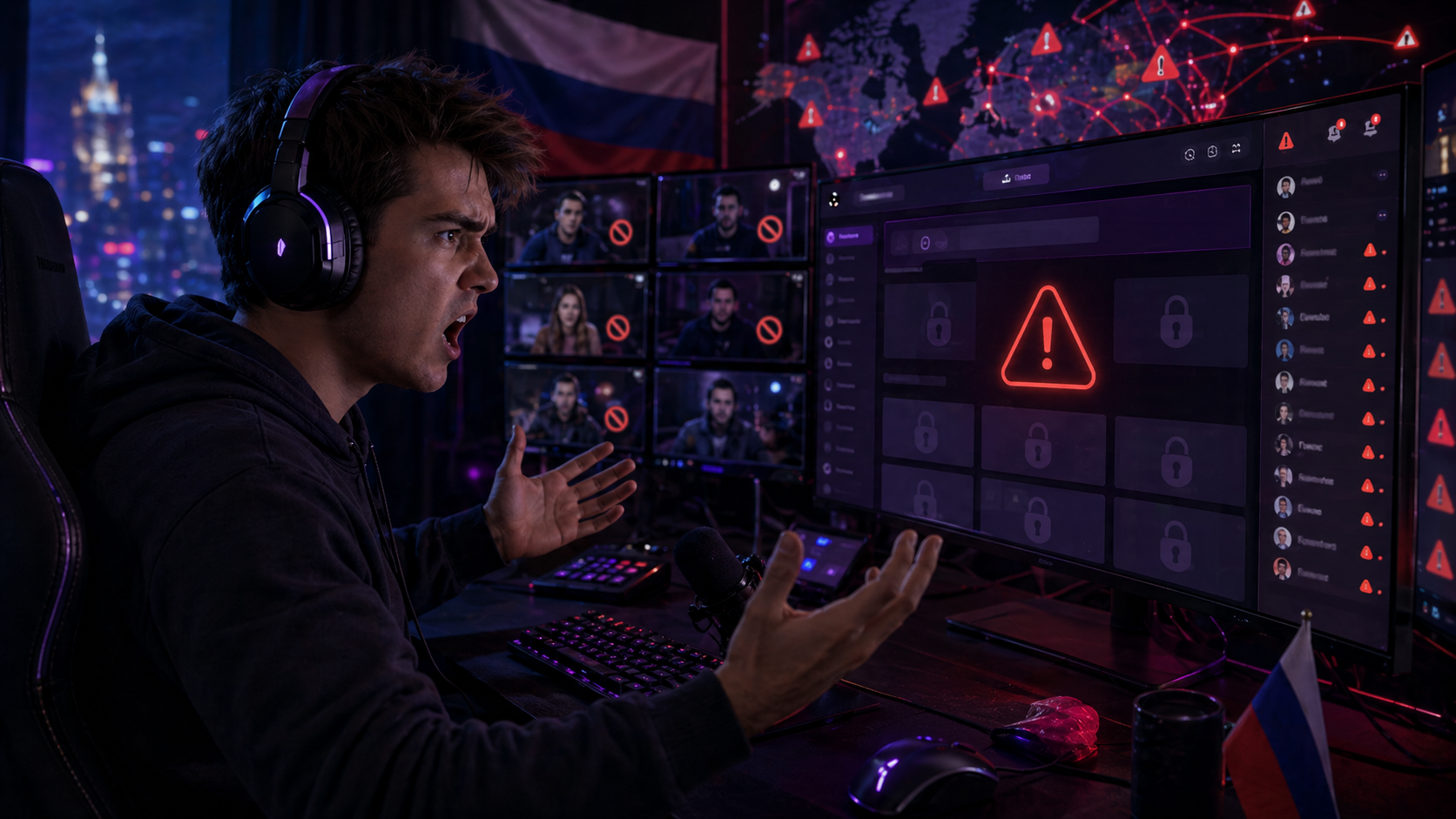
Twitch is once again at the center of a scandal. This time, Russian streamers are the target. The reason? Participation in the "Alabuga Polytech" event. The platform's liberal community turned out to be unprepared for well-known personalities supporting a project where teenagers play CS2 with their idols.
The result — a wave of complaints and mass bans.
According to the Telegram channel "Cybersport XQ," citing screenshots of notifications from Twitch, bans began arriving 6-12 hours after the tournament ended. At the time of publication, 15 accounts have been confirmed banned. Some streamers received temporary 30-day bans, others — permanent bans without the right to appeal.
How a children's tournament led to a ban
"Alabuga Polytech" is an educational project in Tatarstan where schoolchildren learn about esports and modern technology. This time, organizers held a CS2 tournament. They invited popular streamers. They gave teenagers a chance to play side by side with their idols.
No politics. Just gaming, prizes, and children's smiles.
But for Twitch's Western audience, this was enough. Within 24 hours after the event, users flooded streamers with complaints. The wording in Twitch's notifications: "violation of community guidelines regarding prohibited content," "participation in a propaganda event," "support of sanctioned individuals."
Here's what one affected streamer told the editorial team anonymously (fearing another ban):
"I just came to play with kids. What politics? Twitch didn't even ask for an explanation. Just sent a notification: you violated clause 4.6 — banned. That's it. No explanations, no right to defend myself."
15 names. The expected list
Here are those who were banned according to open data and screenshots published on social media:
Anna "Akyuliych" Chernyuk — popular streamer and analyst.
Kirill "poka" Starovoytov — one of the most prominent CIS scene commentators.
Alexey "PCH3LK1N" Pchelkin — CS veteran, known from old team lineups.
Mikhail "Dosia" Stolyarov — legendary player, major champion.
And more than 10 others. Some asked not to publish their names in the media to avoid provoking additional complaints.
The full list of 15 accounts was published in the Telegram channel "Cybersport XQ" — as of today, all are unavailable for viewing on Twitch.
Streamers' reaction: "We're not going to stay silent"
Kirill "poka" Starovoytov wrote on his Telegram channel:
"Twitch has become a platform for a minority that decides what I watch and say. We came to a tournament, not a rally. 12 hours of broadcasting with kids — and a month-long ban. For what?"
Mikhail "Dosia" Stolyarov responded more reservedly, but with a hint of switching platforms:
"I'm thinking about alternatives. I'm tired of my work being nullified with one click."
Some didn't wait for their ban to be lifted and have already announced they're moving to other platforms. VK Play, YouTube, GoodGame. Others are considering MAX — a new Russian platform that doesn't yet ban for "inconvenient" positions.
According to a survey conducted by a Telegram channel among 500 streamer subscribers, 43% already have a backup platform, and 28% are in the process of moving. Twitch is gradually losing Russian content creators.
Double standards: who is allowed and who isn't
Twitch banned Russian streamers for a children's tournament. Meanwhile, the platform:
Calmly allows streams with explicit calls for violence in the Middle East (facts documented by Dexerto in January-February 2026);
Doesn't ban streamers who insult religions and nationalities, as long as it's "within the format of humor";
Turns a blind eye to streams that openly incite hatred.
Twitch states that it "does not comment on individual ban cases for user safety reasons." The platform did not respond to the editorial team's request for comment on the situation with Russian streamers.
This is what double standards look like. Community rules are applied selectively. For some, they're strict; for others — empty words.
What streamers should do. Short and to the point
A Twitch ban means not only loss of income but also years of built community. One complaint can cost you everything.
There are options.
Appeal the ban. Twitch rarely accommodates, especially amid political pressure. But several streamers on the list have already filed appeals. No results yet.
Switch to other platforms. YouTube is still more lenient, though bans for contrived reasons happen there too. Russian platforms VK Play and GoodGame offer freedom of speech, but their audience is still small. MAX is a new platform with Russian jurisdiction. Safe, but takes time to build momentum. According to data for April 2026, VK Play has about 2.5 million unique monthly viewers, GoodGame — just over a million.
Avoid participating in such events. A sad but effective approach. Many streamers are already discussing in private chats whether it's worth risking their career for a single event.
Unite. Create unions, collective lawsuits, open letters. As long as everyone is on their own, Twitch will pressure individuals.
The main question: who is to blame?
The streamers? No. They came to a tournament. Played with kids. Showed them that esports is cool. None of them expressed political views. None called for anything illegal.
Western activists? They just pressed the "report" button. That's their right. Complaints are a moderation tool. The problem is that Twitch doesn't verify complaints for reasonableness. Just 10-20 signals from different accounts — and the ban is issued automatically.
The platform is to blame. Yes. Because the algorithm prioritized complaints above common sense. Because there's no real appeal process. Because the rules work one way. Because Twitch refused to comment on the situation, even when journalists reached out.
Our answer — the platform is to blame. Because it created a system where a children's tournament was equated to a political protest. Absurd.
Why this won't end with the next ban
Twitch won't change. It doesn't care about Russian streamers. The CIS audience is a statistical rounding error for the platform. A few million views — a drop in the ocean of global traffic. They lose them — they won't notice.
But streamers won't disappear either. They'll go where they're valued. Where they won't be expelled for coming to a children's celebration.
The transition has already begun. According to analytics, in the first quarter of 2026, the audience of Russian streamers on YouTube grew by 15%, on VK Play by 9%. MAX shows explosive growth from 3 to 4.5 million users in the last two months. This is no coincidence. It's a trend.
Russian esports and streaming have seen worse. Twitch isn't eternal. Platforms come and go. It's only a matter of time before Russian streamers stop tolerating this and fully switch to their own platforms.
The transition has already begun. Only the blind can't see it
The ban of 15 streamers after the "Alabuga Polytech" tournament is not the first. And not the last. Twitch will continue to pressure the inconvenient. Russian streamers will continue to seek alternatives.
The question isn't who is right. The question is how much longer content creators will tolerate humiliation from the platform that feeds them. And when they will start building their own home — without double standards and political complaints.
The transition has already begun. Some are moving to YouTube. Others are exploring VK Play and GoodGame. Third are betting on MAX. Fourth are waiting to see what happens next. But there's no turning back.
Twitch has lost trust. And trust is something that doesn't come back.
Our Services for Streamers




Our Services for Content Creators