How to Run Ads on a Stream: A Step-by-Step Guide
What Types of Ads You Can Run on a Stream
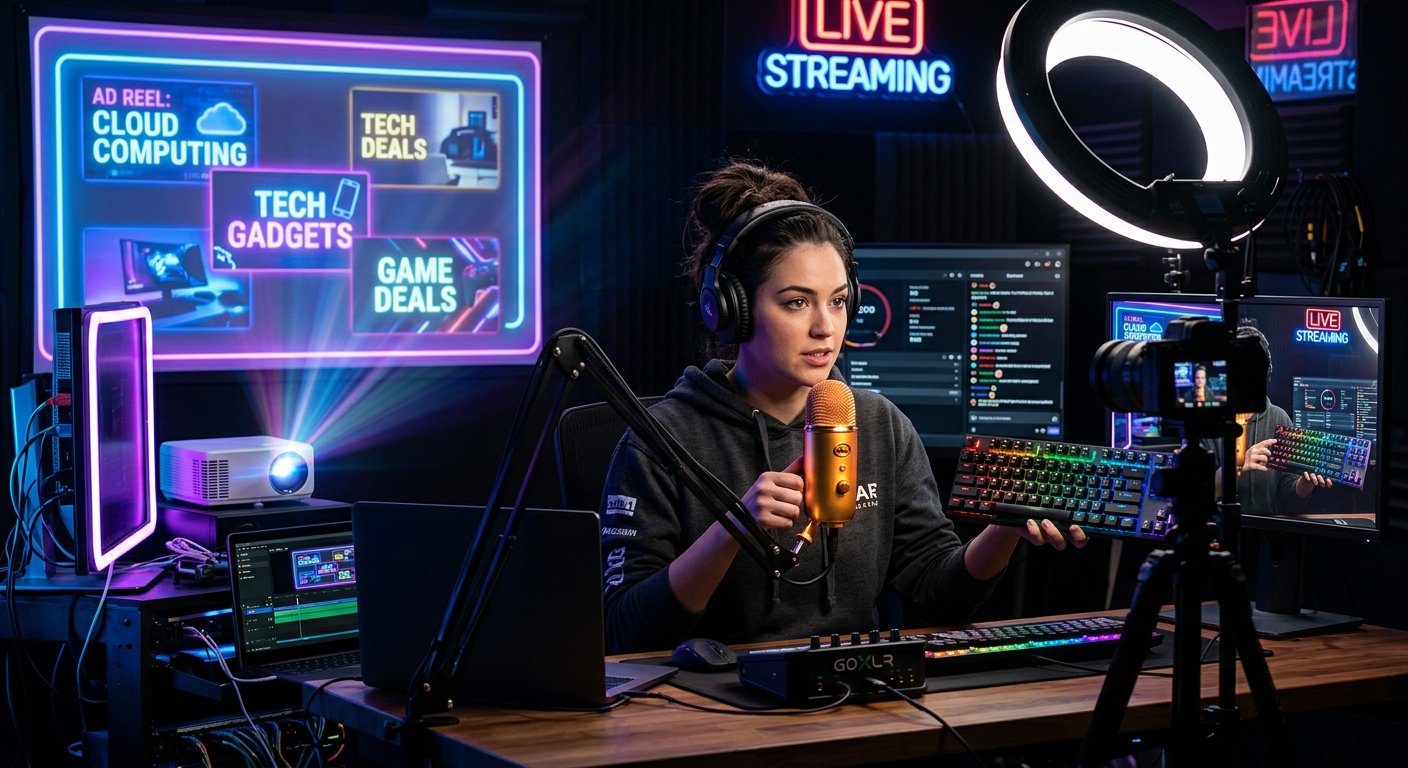
There are two main types of advertising placed during a broadcast: the platform's built-in ads and direct integration with an advertiser. These are different formats with different settings, responsibilities, and levels of control for the streamer.
Built-in ads are launched by the platform itself. They may appear before the stream starts, during the broadcast, or as a separate ad break. The streamer only manages the available parameters: enabling monetization, choosing a schedule, setting the frequency, or triggering a break manually. The specific ad, the audience it reaches, and whether it's actually delivered are usually determined by the platform.
Direct advertising comes from an arrangement with a brand, an agency, or the owner of another project. You read the script yourself, show the product, play the video, place a banner, or leave a link in the description. Here you need to separately agree on the script, payment, timelines, reporting, and labeling.
- a video before or during the broadcast;
- a spoken mention by the host;
- a demonstration of a product, website, or app;
- a logo, overlay, or other design element;
- a link, promo code, and advertising message in the description, chat, or pinned post.
Automated ads don't give you full control over the content, but they don't require you to find an advertiser on your own. Direct integration lets you tailor an offer more precisely to your audience, but preparing it and meeting all the requirements rests entirely with the parties involved in the placement.
What to Choose: Platform Ads or Direct Integration
Built-in advertising works well for regular broadcasts if monetization is available for your channel. You enable the feature in your creator dashboard and use the settings the platform allows. Your income, the number of impressions, and the audience composition depend on the platform's terms, your region, your channel's status, and advertiser demand.
Direct integration requires more effort. First you need to find an advertiser or receive an offer, then vet the product, agree on the format, and prepare for the broadcast. On the plus side, you can choose when to place it, explain the product's benefits in your own words, and send viewers to a specific page.
- If your channel is still small, start by checking the built-in monetization.
- If you have an engaged audience, prepare a media kit and a pitch for direct integrations.
- If the ad interrupts the broadcast, pick a calm moment in advance and warn your viewers.
- If the product isn't related to your channel's theme, explain its benefits specifically for your audience.
Before setting anything up, define your goal: earning income from automated impressions, driving clicks, selling a product via a promo code, gaining subscribers, or boosting brand awareness. The goal determines the format, the call to action, and the metrics you'll check after the broadcast.
Don't mix built-in advertising with contract-based advertising. If the platform shows the ad itself, you don't choose each individual ad. If you've taken an order from a brand, you're responsible for the agreed-upon delivery, materials, and placement design.
What to Prepare Before Launching Ads
First, decide where the ad block will go. In a gaming stream, it could be a pause between matches or while a new location loads. In an educational broadcast, it's a transition between topics. In a talk stream, it's a pre-announced segment. Don't place ads during a climax, an important explanation, or a moment the viewer can't afford to miss.
- Describe your audience: their interests, level of expertise, and main needs.
- Choose the format: an ad break, a video, a spoken mention, a demonstration, or a link.
- Prepare a short script without unverified claims or promises.
- Check the ad link, promo code, product, demo account, and offer expiration date.
- Decide how you'll measure results: clicks, leads, sales, sign-ups, or promo code usage.
Do a test recording before you go live. Check the microphone, the video's volume, the scene in OBS or another program, the overlay's placement, and text readability. Ad materials shouldn't cover the host's face, the chat, game stats, or important interface elements.
If you're going to show a website or app, open the necessary pages in advance. Remove personal messages, passwords, email, payment data, and internal dashboards from the demonstration. Don't use existing video, music, or images unless you've verified the right to broadcast them.
How to Set Up Built-in Ads on Twitch
On Twitch, advertising tools aren't available to every channel. Availability depends on the creator's status, enabled monetization features, region, and the platform's terms. Check availability directly in the Creator Dashboard, not from an old tutorial video.
- Log in to Twitch and open the Creator Dashboard.
- Go to Stream Manager and find Ads Manager or the advertising-related section.
- Check whether monetization is enabled and whether ad breaks are available for your channel.
- Open the available settings for schedule, frequency, and ad duration.
- Save the settings and check whether ad controls have appeared in your broadcast panel.
If Stream Manager has an action to manually trigger an ad break, use it at a suitable moment: between rounds, during loading, or before a short break. Don't trigger a block during an important game scene or a long explanation.
In Ads Manager, you may encounter settings related to ad density or scheduling. The names of the options can change. Choose a setup where viewers understand when a break will happen and automatic and manual triggers don't overlap.
Even with ads enabled, not every viewer will necessarily see the ad. Impressions are affected by Twitch's settings, the device, the region, advertiser demand, and other conditions. The streamer also doesn't choose each ad and can't guarantee a specific number of impressions.
Common Mistakes When Launching Ads on Twitch
The first mistake is enabling automatic breaks while also triggering them manually often. As a result, ads appear more densely than you planned. After changing the schedule, do a broadcast while monitoring the breaks and note the time of each trigger.
The second mistake is not accounting for missed content. If a viewer tunes in during an ad block or leaves because of an unexpected break, they may miss an important part of the broadcast. For a long stream, explain in advance that ads will run at safe moments.
- You don't check Ads Manager before going live and discover that the feature isn't available to your channel.
- You trigger ads during a decisive round, a giveaway, or an important announcement.
- You assume Twitch will show every viewer the same ad.
- You use a third-party bot or script that requires your channel password.
- You mistake Twitch's built-in ads for direct integration and don't agree on a separate script with the brand.
- You don't warn viewers about ad breaks even though they interrupt the content.
If Ads Manager or manual triggering is missing, check your channel's status and Twitch's help center. Don't try to bypass restrictions with unknown extensions, automated scripts, or services that require access to your account.
How to Enable Ads on a YouTube Stream
On YouTube, ad settings are found in YouTube Studio and the live streaming interface. Access depends on the channel's participation in the partner program and meeting current requirements. First check monetization itself, then the settings for the specific broadcast.
- Log in to YouTube Studio under your channel account.
- Open the "Monetization" or "Revenue" section and check whether ad features are available.
- Go to the content section with live streams or select "Create" and "Go live."
- Open the desired broadcast in Live Control Room.
- Find the "Monetization" tab or section and enable the available ad impressions.
- Save the settings before going live and check the ad controls in Live Control Room.
During the broadcast, a button to manually trigger an ad may be available in the control panel. The name and location of the element depend on the current version of the interface. If there are automatic ad breaks, check their frequency before going live and don't leave the setting unattended.
YouTube may show ads before the stream starts, during the broadcast, and in other available formats. Impressions depend on the channel's settings, the audience, the device, and other conditions. Enabling monetization doesn't mean an ad will appear for every viewer.
If ad settings are missing, that doesn't prevent you from doing a direct integration with a brand. However, such an integration isn't enabled through YouTube monetization: the script, video, link, and labeling need to be prepared separately.
Common Mistakes When Launching Ads on YouTube
On YouTube, people often confuse monetization of regular videos with live stream settings. Just because ads are available on a channel's videos doesn't mean they're enabled for every broadcast. Check the specific stream you've selected in Live Control Room.
Another mistake is leaving automatic breaks unchecked. They may land on a demonstration, an explanation, or a guest's appearance. If your interface has manual control, plan ad blocks around transitions and mark them in the script in advance.
- You enable channel monetization but don't check the settings for a specific broadcast.
- You don't save your changes before the stream starts.
- You trigger ads during an important part of the broadcast and lose the context for viewers who return.
- You confuse the ad button with features for showing slides, a trailer, or other content.
- You think manual triggering guarantees that all viewers will see the ad.
- You show a brand's ad video without verifying the rights to the music, images, and footage.
Before your first commercial broadcast, do a test stream in private or limited mode if the chosen format allows it. Check whether the ad material covers the main content and whether the link in the description works correctly.
How to Check Ads on VK Play Live
VK Play Live, also known as VK Live, may offer creators different capabilities depending on account status, region, monetization terms, and the current version of the dashboard. So first check whether the ad module is available for your channel specifically. Old guides may describe sections that no longer exist in the interface.
- Log in to your VK Play Live account through the official web version.
- Open the creator dashboard or the broadcast management section.
- Check the sections related to monetization, advertising, and broadcast settings.
- If the ad feature is available, review the terms and enable it for your channel or the selected broadcast.
- Configure the offered settings for frequency, timing, or manual triggering.
- Before going live, check the control panel and make sure the action for an ad break has actually appeared.
The names of VK Play Live sections may differ depending on the dashboard version. If the module you need isn't there, that doesn't mean you can replace it with a third-party overlay, bot, or script. First check the official help center and the platform's rules.
When built-in advertising isn't available, you can separately arrange a direct integration. In that case, place the link, text, and visual materials only in permitted locations: in the broadcast, description, chat, or pinned message.
Common Mistakes When Launching Ads on VK Play Live
The main risk when working with VK Live is relying on another creator's interface. A feature may be available to one channel and missing for another. Don't promise an advertiser impressions through VK Play Live tools until you've seen the necessary settings in your own dashboard.
- You take an old video as a current guide and look for a button that no longer exists.
- You don't check the regional and account conditions for enabling monetization.
- You replace a built-in ad impression with an overlay, bot, or script without checking the rules.
- You don't test how the link and advertising message look in the chat or description.
- You don't agree with the advertiser on what to do if built-in advertising is unavailable.
- You assume the platform will automatically handle a direct ad integration.
If the VK Play Live interface has changed or the ad module is temporarily unavailable, tell the advertiser in advance. Agree on a replacement format, a rescheduled placement, or another way to show the ad — don't launch an unverified tool at the last minute.
How to Do a Direct Ad Integration
It's best to agree on all the essential terms in writing before the broadcast. A single message saying "tell them about the product" isn't enough. Put in writing exactly what you'll show, how long the block lasts, when it airs, and what materials you'll hand over after publication.
- the name of the product or service and the advertiser;
- the script, required benefits, and prohibited wording;
- the duration of the block and the number of mentions;
- the link, promo code, and offer expiration date;
- requirements for the video, overlay, description, and pinned message;
- the placement fee, payment terms, and conditions for rescheduling the broadcast;
- who's responsible for labeling and submitting reports.
Don't rewrite the ad copy mechanically if it sounds unnatural for your channel. Agree on the meaning and required information, but adapt the wording to your usual way of speaking. At the same time, don't add a personal recommendation if you haven't used the product and can't honestly stand behind your words.
If you need to show a website, open it in advance and prepare a separate scene or window. Don't enter passwords or payment data in front of viewers. If the advertiser provided a ready-made video, watch it in full before the broadcast and check the rights to use all the materials.
How to Label Ads on a Stream in Russia
Online advertising distributed to an audience in Russia is subject to labeling requirements. If the message is aimed at promoting a product or service and is placed by arrangement with an advertiser, you usually need to mark the advertising nature of the publication, identify the advertiser, and use the ERID ad identifier. The exact scheme depends on the format and the parties involved in the deal.
Labels like "episode partner," "sponsor," or "discount with promo code" don't always replace labeling on their own. Before the ad block, it's better to tell viewers directly that advertising is starting, and display the information required for the campaign on screen. For a short spoken mention, agree separately on where the label and identifier will be visible.
ERID isn't something you make up yourself or carry over from another campaign. It's obtained by a participant in the advertising chain through an ad data operator. Who registers the identifier, submits placement information, and reports on the campaign needs to be determined before the broadcast: it could be the advertiser, the agency, or the placement contractor, depending on the contract and the working arrangement.
- who is considered the advertiser;
- who obtains the ERID;
- where the "Ad" label appears;
- how the advertiser's information is indicated;
- where the identifier is placed: in the overlay, description, link, or another element;
- who submits data on the actual time, format, and placement period.
Built-in advertising on Twitch, YouTube, or VK Play Live and a direct order from a streamer are not the same thing. With automated impressions, the labeling is usually tied to the platform's own procedures, but that doesn't release you from checking your role in the advertising chain. You can't automatically assume that the platform's labeling covers a separate ad mention in the broadcast.
Additional restrictions apply to financial services, medical products, alcohol, gambling, and other regulated categories. Labeling alone doesn't make a placement permissible. Before starting a campaign, check the product category, the platform's rules, and current requirements of Russian law.
How to Technically Prepare an Ad Block
For a spoken mention, mark the start and end of the block in the script in advance. For a video, prepare a separate scene or source in your broadcasting program. For an overlay, check that the label, advertiser, and other required information stay readable on a phone and don't disappear when you switch scenes.
- Gather all the materials into one folder and label the current versions of the files.
- Check the video from start to finish: sound, image, duration, and the presence of required information.
- Open the ad page and check the link without logging in.
- Check the promo code, the offer's expiration date, and whether the text matches the promotion's terms.
- Do a test recording with the ad block and watch it from the viewer's perspective.
- Prepare a backup plan in case the website, video, or demo account fails to load.
Don't show the ad screen for too long without explanation and don't let it cover the main content. If the product is demonstrated in a game or app, decide in advance which actions can be performed publicly. For broadcasts with guests, warn them about the ad block and agree on who delivers the required wording.
If the link is published in the chat, check whether moderation deletes it and whether the audience can see it. In the stream description, include the link in the agreed format. Don't replace the ad link with a random shortener if the advertiser needs to track clicks or if it changes the campaign information.
How to Evaluate Results and Avoid Annoying Your Audience
After the broadcast, don't just compare the number of clicks. Look at viewer retention, chat messages, promo code usage, leads, and the overall reaction. A drop in activity may not be caused by the ad alone: the stream's topic, the time it aired, the guest, and technical issues all matter.
- Few clicks — check the link, the call to action, and whether the product matches your audience.
- Viewers don't understand the offer — shorten the text and name a specific action.
- Lots of negative messages — change the timing and warn about the ad in advance.
- People leave after the break — reduce the frequency and don't interrupt important segments.
- The ad feels out of place — tie the example to your channel's theme without adding unverified promises.
Don't judge an integration by a single broadcast if your channel's audience changes from stream to stream. Keep the recording, statistics, correspondence with the advertiser, and proof of placement. These materials will come in handy for reporting and will help you understand which format fits your channel best.
For built-in advertising, the priority is controlling the frequency and timing of breaks. For direct integration, additionally check that the script is followed, the link works, and labeling is in place. Different formats can't be compared by a single metric.
Quick Takeaways: What to Do Step by Step
- Define your goal: income from built-in impressions, clicks, sales, sign-ups, or promoting another project.
- Choose a format and check the platform's rules: Twitch, YouTube, or VK Play Live.
- Open your creator dashboard and make sure monetization and ad features are available for your channel.
- Set up a schedule or manual triggering of ad breaks if the platform offers that option.
- For direct integration, agree in writing on the script, link, payment, timelines, materials, and reporting.
- Check the labeling, ERID, and who's responsible for submitting data before publishing the ad.
- Do a technical test, pick a calm moment, and warn viewers about the ad block.
- After the broadcast, save the statistics, assess the audience's reaction, and adjust the frequency or delivery.
Last Articles
What has changed in design and functionality We have updated the website to make working with it faster and more convenient. The main changes affect ..
Good afternoon, I've collected all the news during this time.: 1. The main news is that prices for twitch viewers have been greatly reduced, while Tw..
1. Use promo code "December2025" for a 15% discount for all our viewers2. We have reduced the base prices for our configurator and the most affordable..
Twitch services are working stably, so we are ready to cooperate with squads, resellers, service owners, bot owners, and many others.Individual te..
We have completely updated our Twitch viewer services, and they are now working stably. We only use high-quality IP addresses for the viewers.The ..
Hello everyone! Today, we are announcing a new feature—"Twitch Viewer Configurator". Now, you can customize any plan for your Twitch channel. Choo..
Greetings, I have compiled a guide for streamers, which will be very relevant at the moment. Now YouTube and twitch have disabled monetization from vi..
We have finally developed the APINow it will be more convenient for our partner sites to work with us.To update the maximum tariffs for YouTube, an up..
Due to the huge popularity of the partnership services and referral program, we have made a cooperation table. The essence is very simple: more live a..
Our Services for Streamers



Our Services for Content Creators