Why a Losing Streak Reduces Viewer Retention on a Stream
The viewer sees the current broadcast, not your overall skill level
A random viewer rarely comes to a stream with full context. They don't know that you recently ranked up, are testing a new role, or had several strong matches before this streak. They open the broadcast and in the first few minutes assess the picture: a loss on screen, irritation in your voice, chat discussing a mistake, and the next game hasn't started yet.
Your regular audience is ready to go through rough patches with you. A new viewer has no reason to wait for the streak to end. If the broadcast doesn't offer emotion, useful analysis, interaction, or a clear goal, they switch to another channel. A viewer decides to stay based on the state of the broadcast at the moment they join.
After repeated losses, the clear story disappears
A competitive stream holds attention not only through wins. The viewer is interested in following a goal: climbing the rank, closing out a series, mastering a character, improving a specific skill, or testing a strategy. Even a lost match serves that story if it's clear what will change next.
During a prolonged streak, the goal is often replaced by the phrase "I just need to win it back." That explains nothing to the viewer. The rating drops, decisions repeat, and the next game has no new meaning. The audience doesn't understand why they should watch another match with the same pick, route, build, or playstyle.
There's also a downside to a goal that's too rigid: if the entire broadcast revolves only around rank, every loss is perceived as a failure. It's more useful to keep a second goal that can be achieved regardless of the result: practice positioning, break down round economy, or test a new combo.
A repetitive scenario is more tiring than the loss itself
A loss doesn't necessarily make a stream boring. An even match, an unexpected comeback, a strong opponent, or a precise breakdown of a mistake can hold attention better than a quick win. The viewer leaves when they already know the entire scenario: an early mistake, irritation, blaming the team, silent searching, and another loss.
This is especially noticeable in games with long queues, loading screens, and match preparation. There's less action and more repetitive emotions. A person doesn't need to watch the map to the end to understand your reaction to the finale. They close the stream in the middle of the game or during the search.
You can change the scenario without drastically switching games: pick a different role, limit a risky strategy, play one match with a specific mindset, or do a short breakdown after a key moment. The downside of this approach is that experiments sometimes worsen the result in the next game. But at least the viewer sees development, not a repeat.
Tilt changes the atmosphere for chat and new viewers
Genuine emotions make a broadcast more convincing. Viewers don't need a host who reacts the same way to a win and a loss. The problem starts when anger becomes the main content of the broadcast: you snap at chat, put yourself down, argue with teammates, or repeat the same complaint about matchmaking for several minutes.
A loyal viewer often stops writing at such a moment: any remark can be perceived as pressure or mockery. A new viewer won't try to figure out the cause of the conflict. It's easier for them to go somewhere where communication is safer and clearer.
You don't need to fake a good mood. It's enough to honestly name your state and immediately state the action: "this streak is annoying, after this game I'm changing roles," "I'm taking a short break and reviewing the moment," "I'm closing out the ranked block." The downside of direct acknowledgment is that some viewers may pick up the negative theme. So don't dwell on it for long and steer the conversation back to the plan.
Blaming teammates gives the viewer no reason to stay
The team, balance, technical issues, and opponents' actions can genuinely affect a match. But constant blaming doesn't create content. The viewer hears an excuse rather than understanding what you yourself could have controlled: position, timing, target selection, communication, or the decision to retreat.
You can break down teammates' mistakes if it helps understand the game. For example, instead of "my teammate threw everything," it's more useful to explain: the team started a fight without resources, so in the next match you'll show up on the map earlier or play from a different point. Such commentary gives the viewer knowledge and shows that the loss wasn't in vain.
The breakdown has a downside: it easily turns into a lecture and slows the pace. Limit it to one moment and one fix for the next match. Full analysis is better left for a separate block if your audience comes partly for educational content.
Silence in queue becomes a convenient exit point
After a loss, a streamer often withdraws: checking stats, reading team messages, getting ready for a new game. For the viewer, this is the easiest moment to close the stream. There's no match, no interaction, and the screen shows only a menu or a results table.
You don't have to fill the pause with noise. It's enough to give chat one entry point: name the mistake from the last match, ask for an opinion on a debatable decision, show the plan for the next game, or briefly explain a role change. If you need to be silent, say so directly and give the reason.
Active chat engagement also has a downside. If you discuss every loss for a long time, the queue and preparation stretch out, and the conversation pulls you away from the game. It's better to pick one question for the transition between matches and return to it after the result.
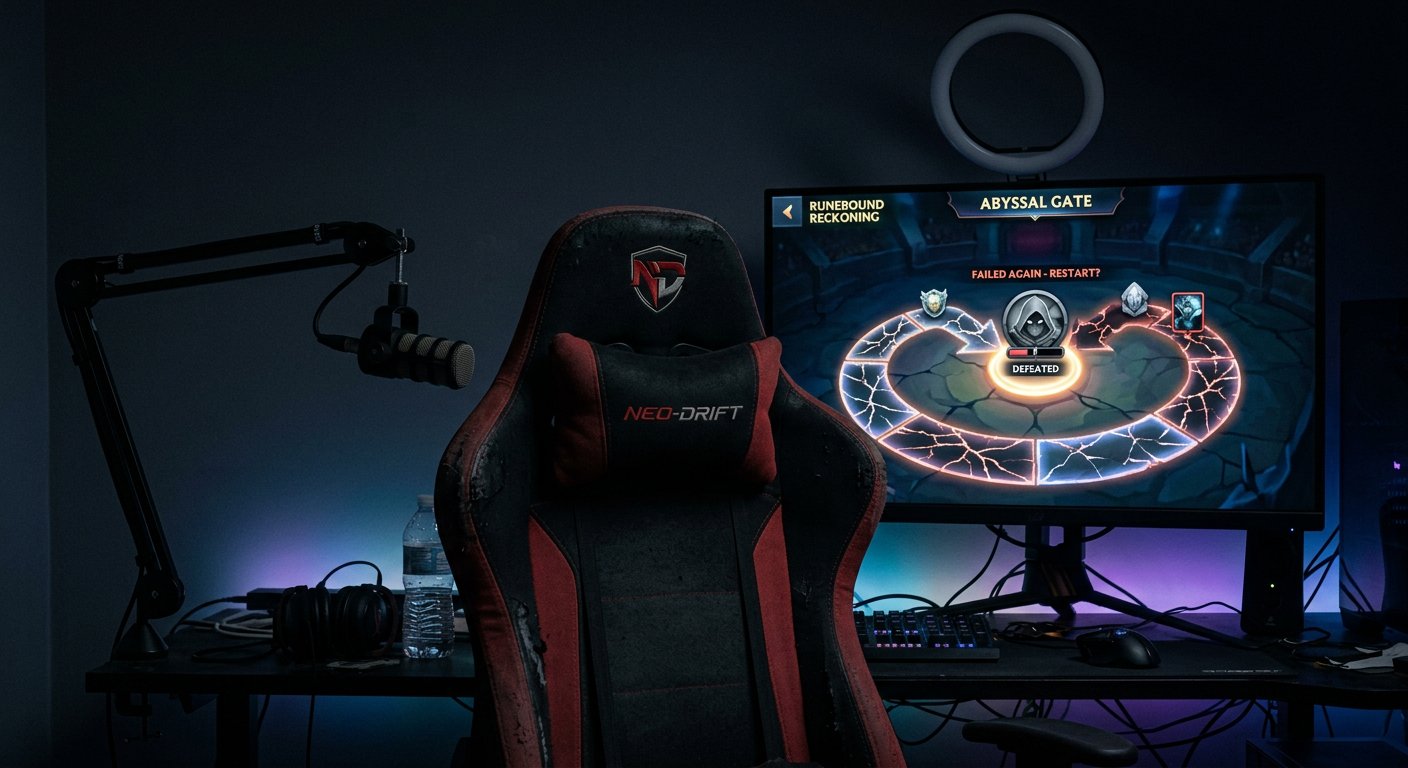
A practical scenario: how to turn a streak into content
Imagine a streamer who has lost several ranked matches on their main role. In the first games, they silently queued up again, repeated the same strategy, and got irritated by the team's decisions. Chat gradually went quiet: there was nothing to discuss except another loss.
Instead of yet another identical game, they announced a plan: for one match they're changing roles, giving up risky early pressure, and asking chat to evaluate one specific moment after the game. Before queuing, they take a short pause to review the key moment from the last match. In the next game, viewers are already following not just the score but whether the change works.
Retention in such a scenario doesn't have to grow immediately: part of the audience came only for wins or for the usual role anyway. But the broadcast gains new intrigue, and the viewer has a reason to wait for the result. The loss starts working as material for the next decision, not as a backdrop for new tilt.
Changing the game, role, or mode doesn't help in every situation
Sometimes the best way to stop tilt is to step out of ranked mode. You can switch to practice, a normal match, another mode, or briefly change games. This restores the pace, reduces pressure, and shows that you're not stuck in a non-working scenario.
The downside is obvious: part of the audience came for a specific competitive game and a stated goal. If you switch to another format after every losing streak, viewers stop believing that the ranked block will ever be completed.
To keep the change from looking like an escape, set a frame for it in advance. For example, one practice match to recover, a short breakdown before returning to ranked, or a separate block at the end of the broadcast. Don't promise a guaranteed win after the break: that creates extra pressure for both you and chat.
Track drop-off by moments, not just by average viewership
Average viewership won't show why viewers left. It's more useful to note what was happening before the decline: did a match end, how long was the queue, was there a conflict, did a long monologue about teammates appear, did you explain the plan for the next game.
Compare several recurring points: the first loss, several losses in a row, the transition between matches, a short pause, a role change, and chat discussion. If viewers leave before the match even ends, the problem may be in the predictable course of the game or in your reaction. If the decline starts after the final screen, check the transitions and silence in queue.
Don't draw conclusions from a single broadcast. Retention is affected by broadcast time, category, competition in the game, and your audience composition. But recurring drop-off at the same moments is a reason to change the scenario, not just wait for a lucky streak.
How promotion helps retain an audience on bad days
Promotion doesn't cancel losses and shouldn't mask a weak broadcast with an influx of random views. Its job is to bring to the stream an audience that suits your format: competitive game, breakdowns, interaction, challenges, or the path to rank. Then the viewer understands why they came, even if a particular match goes badly.
In a promotion service, it's useful to work not only on reach but also on retention points: designing announcements around the stream's real goal, clips with decision breakdowns, a clear description of the format, and analysis of transitions during the broadcast. If the audience is promised "hardcore ranked with no pauses" but you regularly switch to a calm breakdown, expectations will diverge.
The downside of promotion is that it won't fix a toxic atmosphere, drawn-out queues, and the lack of a plan after a loss. An influx of new viewers will even make the problem more noticeable: they'll leave faster if the first minutes of the broadcast don't offer clear value.
What to do before your next ranked stream
- Formulate two goals for the broadcast: a main one for rank and a backup one for skill or strategy.
- Prepare a short phrase for a losing streak: what you'll change after the next match.
- Pick one question for chat that you can ask in queue without a long discussion.
- Decide in advance after what state you'll take a break, change mode, or end the ranked block.
- After the broadcast, note the moments where viewers left: match finale, queue, tilt, conflict, or format change.
- Request a channel promotion review if you need a plan for attracting the right audience and working on retention during streams.
Last Articles
What has changed in design and functionality We have updated the website to make working with it faster and more convenient. The main changes affect ..
Good afternoon, I've collected all the news during this time.: 1. The main news is that prices for twitch viewers have been greatly reduced, while Tw..
1. Use promo code "December2025" for a 15% discount for all our viewers2. We have reduced the base prices for our configurator and the most affordable..
Twitch services are working stably, so we are ready to cooperate with squads, resellers, service owners, bot owners, and many others.Individual te..
We have completely updated our Twitch viewer services, and they are now working stably. We only use high-quality IP addresses for the viewers.The ..
Hello everyone! Today, we are announcing a new feature—"Twitch Viewer Configurator". Now, you can customize any plan for your Twitch channel. Choo..
Greetings, I have compiled a guide for streamers, which will be very relevant at the moment. Now YouTube and twitch have disabled monetization from vi..
We have finally developed the APINow it will be more convenient for our partner sites to work with us.To update the maximum tariffs for YouTube, an up..
Due to the huge popularity of the partnership services and referral program, we have made a cooperation table. The essence is very simple: more live a..
Our Services for Streamers







Our Services for Content Creators