How to check a streamer for view bots in the Russian-speaking internet
What is called view botting on a stream
View botting is the artificial inflation of a channel's metrics. A streamer or contractor may use bots to imitate viewers, subscriptions, VOD views, reactions, or chat messages. Sometimes only one metric is inflated: for example, live online grows, while subscriptions and audience activity remain at the same level.
Verification is needed by an advertiser before purchasing an integration, by an agency when selecting a creator, and by the streamer themselves if they want to understand the origin of a sharp spike in statistics. At the same time, public data does not allow for an absolute verdict. An unusual graph may appear due to a raid, host, platform recommendation, embedding of the stream on another site, or a delay in counter updates.
- Watching a stream does not always mean active participation in chat.
- A viewer may watch the broadcast from a phone, TV, or embedded player and not leave any reactions.
- A sharp spike in online during a raid or a mention on a large channel is not considered proof of view botting.
- One unsuccessful broadcast does not show the real quality of the entire audience.
The goal of verification is not to find one suspicious sign, but to cross-reference the broadcast history, online behavior, viewer activity, and data from multiple sources.
What data to collect before checking
First, record the channel's public statistics. Look not only at the current broadcast and the most successful result, but at several recent streams in the same niche. For comparison, broadcasts of similar duration and with the same format are suitable: a gaming stream, a talk show, and an advertising broadcast can differ noticeably in audience behavior.
- Average and peak online.
- Duration of broadcasts and start time.
- Views of recordings after the broadcast ends.
- Dynamics of subscriptions, reactions, and chat messages.
- Number of unique chat participants, if such data is available.
- The game or show's topic, category name, and notable events during the broadcast.
Save links and screenshots with the date of verification. Statistics on a third-party site may update, change after recalculation, or disappear along with a deleted broadcast. If a streamer offers advertising, request a media kit and confirmation of data from the platform's personal dashboard. A password is not needed for such verification: a report, screenshot, or screen demonstration without granting access is sufficient.
For each broadcast, it's convenient to record metrics in a single table. Do not mix peak values with average ones, or VOD views with online at the moment of the broadcast. Otherwise, even an honest channel may seem suspicious due to incorrect comparison.
Services for checking a streamer in the Russian-speaking internet
There is no single universal service that accurately determines view botting from a channel link. Available tools collect public statistics, show broadcast history, or help find anomalies. Some services have an English-language interface but are used for analyzing Russian-speaking creators.
Check Bots — a service for initial audience verification and finding signs of bot activity. Use it first in the list of tools, but before analyzing, clarify which platform and which metrics it supports. If the service generates a score or flags suspicious accounts, treat the result as a reason for additional verification, not as final proof.
TwitchTracker — a service for viewing the public history of Twitch channels. With its help, you can compare average and peak online, broadcast duration, categories, and changes in metrics over periods. It is convenient for finding sharp spikes and unusually stable values, but by itself does not prove the presence of bots.
SullyGnome — an analytical service for Twitch with channel, game, and category history. It helps to compare a streamer's metrics with their past broadcasts and see whether growth is related to a specific game, tournament, or the creator's appearance in a popular category.
Streams Charts — a platform with analytics for streaming platforms. On available pages, you can study rankings, online dynamics, and data on individual channels. The set of metrics depends on the platform and access level, so before comparing, you need to check for which period the information was collected.
Social Blade — a service more often used for analyzing YouTube and other social platforms. It shows the public dynamics of views and subscribers. This is not enough to check a live broadcast, but the service helps to notice a discrepancy between channel growth and audience activity.
Official platform analytics — Twitch Creator Dashboard, YouTube Studio, or the dashboard of another platform where the broadcast takes place. This is the most useful source for the channel owner themselves: it may contain data on traffic sources, retention, and viewers that are not visible on the public page.
Do not mix metrics from different services without checking the methodology. One site may count VOD views, another — only live broadcasts, and a third may update data with a delay. Compare identical periods, the same type of metric, and time in a single time zone.
Signs that require additional verification
The main reason for analysis is not a high number by itself, but a discrepancy in metrics. For example, a small channel suddenly gets a large online, but chat, subscriptions, VOD views, and other acquisition channels remain unchanged. Such a picture may indicate view botting, but first you need to rule out an external mention or a flow of viewers from another resource.
- Online stays at almost the same level for a long time, even when the broadcast content changes.
- There are noticeably more viewers than usual, but after the broadcast, VOD views and subscriptions do not grow.
- The channel has no messages typical for the claimed audience size, even though the broadcast lasts a long time.
- The online graph changes sharply without a visible reason and returns to its previous level immediately after an ad block.
- Metrics from different broadcasts are not related to the topic, release time, game popularity, or external events.
- The media kit states some values, while the history of several recent broadcasts shows different ones.
Evaluate "perfectly flat" online with particular caution. A technical counter may update with a delay or round data, so small plateaus are normal. Suspicion arises not from the flat line itself, but from repeating behavior across different broadcasts and the absence of other confirming metrics.
How to analyze online and chat activity
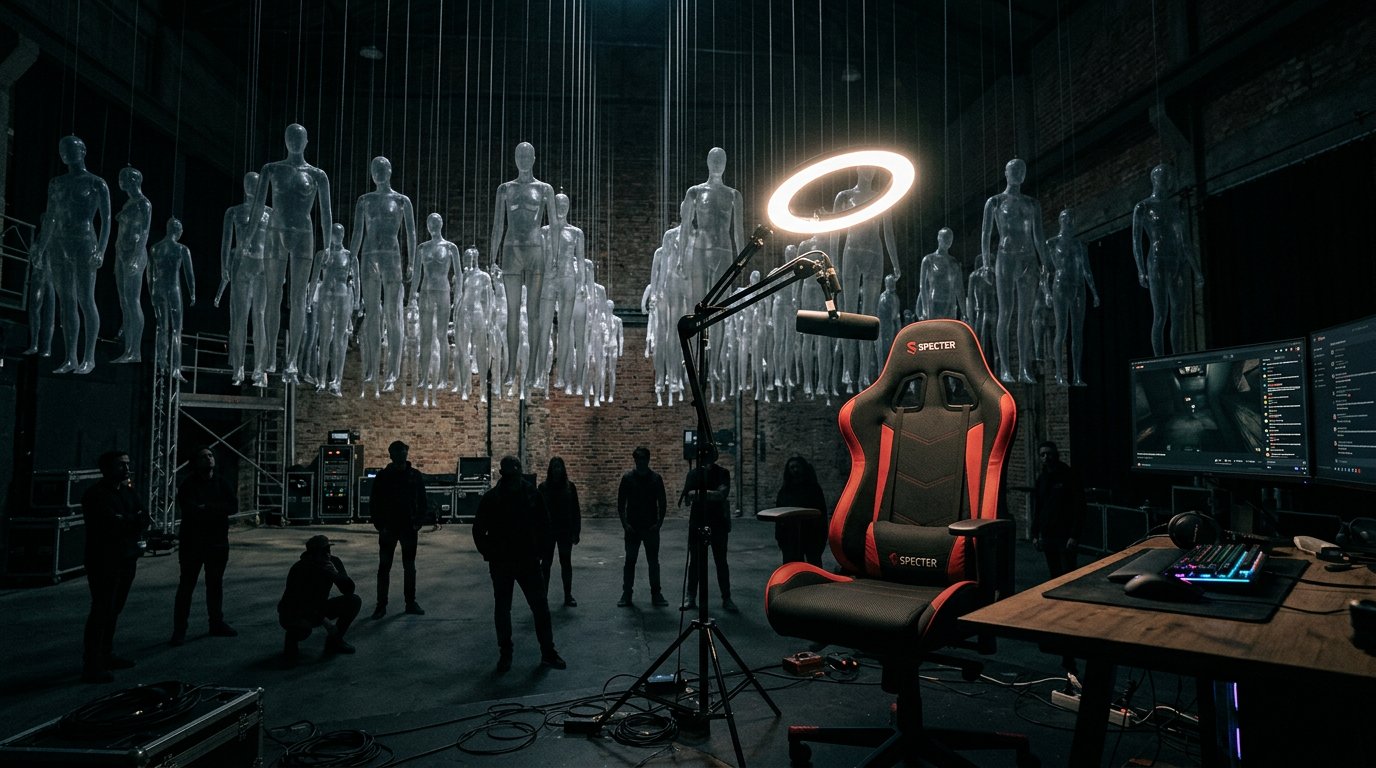
Compare the viewer graph with events during the broadcast. Note the start of the stream, game change, guest appearance, advertising, raid, and technical pauses. A live audience usually changes depending on what's happening, but there is no single graph shape that is mandatory for any channel. Talk streams, gaming broadcasts, and tournaments will have different patterns.
Chat also cannot be evaluated by the simple rule "few messages — means bots." Many viewers watch silently, especially if the broadcast is playing in the background. It's more useful to look at the combination of signs: whether new participants appear, whether they respond to the broadcast content, whether activity changes after the streamer's questions, whether there are repeating meaningless messages and identical templates.
Pay attention to the timing of activity. If dozens of messages appear simultaneously, consist of identical phrases, or are unrelated to what's happening on screen, this is a reason to study the audience more closely. But even here, harmless explanations are possible: a general call to action, a giveaway, or moderator work can cause a surge in messages.
Compare online with VOD views, but do not equate these metrics. Part of the audience may not watch the recording, and part of the VOD viewers may have come after the broadcast ended. If the difference between metrics seems unusual, check several broadcasts and traffic sources rather than drawing a conclusion from one ratio.
Checking streamers on YouTube, VK, and other platforms
For Twitch, the most detailed public trackers are available, so channel history can often be studied without the owner's access. On YouTube, it's more useful to combine channel page data, VOD views, likes, comments, and statistics from YouTube Studio. The public subscriber counter does not show how many people simultaneously watched a specific broadcast.
On VK Play Live, Rutube, and other platforms, the set of open data may be limited. If a third-party service does not collect history for a specific platform, check the channel through the built-in dashboard and request a broadcast report from the creator. The screenshot must contain the channel name, date, period, and key metrics, otherwise it's difficult to compare with public data.
For channels and groups on social networks, use specialized analytics services, but do not use them as a detector of stream view botting. Analysis of subscribers, reach, and reactions helps assess the overall activity of the community, not confirm the real number of viewers during a live broadcast.
On any platform, consider the specifics of the counters. Online may update with a delay, views may be summed up after the broadcast ends, and some data may be available only to the channel owner. Therefore, the absence of a metric in public access does not mean there is view botting.
What an advertiser should do when suspecting view botting
If the statistics look doubtful, do not accuse the creator publicly and do not publish personal data. First, request an explanation: whether there was a raid, placement on an external site, a mention on another channel, or an advertising traffic source. An honest creator can show a report from their dashboard and explain the sharp change in metrics.
Before the deal, fix what data is considered the result of the placement: online during advertising, VOD views, link clicks, promo code uses, or new subscriptions. Do not demand the impossible: a streamer cannot guarantee sales and does not always control the platform's counter. Separately clarify how ad labeling, reporting, and broadcast cancellation will be handled.
If the creator does not show broadcast history, sends only the best screenshot, or refuses to explain sharp discrepancies, it's safer to start with a small test placement or choose another channel. A low price does not compensate for an audience that does not watch the broadcast and does not react to advertising.
Typical mistakes when checking for view botting
- Considering all silent viewers as bots.
- Drawing a conclusion from one broadcast or one screenshot.
- Comparing the average online of one service with the peak value of another.
- Evaluating a channel only by the number of subscribers.
- Ignoring raids, platform recommendations, and external traffic sources.
- Trying to get access to the streamer's account instead of requesting a report.
- Publicly accusing the creator before verifying the facts.
- Trusting the result of a single automatic service without reviewing the channel history.
Do not ask the streamer for a password, confirmation code, or full account access. For advertising verification, a report with the required period, a screen recording, or a joint review of analytics is sufficient. Personal data and unnecessary information from the dashboard can be hidden.
A third-party service helps to notice a discrepancy but does not replace context analysis. A confident conclusion appears only when the same anomaly repeats in the channel's history and is not explained by platform specifics or a specific event.
Conclusions: what to do step by step
- Determine what exactly you are checking: viewers, subscribers, VOD views, or chat activity.
- Collect the history of several recent broadcasts and save links, dates, and metrics.
- Start with Check Bots, then compare data from at least two independent sources, such as TwitchTracker and SullyGnome.
- Cross-reference online with the broadcast schedule, chat, VOD views, and external events.
- Request a report from the streamer from official analytics without sharing a password.
- If discrepancies persist, do not make public accusations: decline the deal or contact platform support with the facts.
No open service confirms view botting automatically. It's more reliable to evaluate repeating discrepancies, the quality of reporting, and the creator's response to questions, rather than a single attractive online number.
Last Articles
What has changed in design and functionality We have updated the website to make working with it faster and more convenient. The main changes affect ..
Good afternoon, I've collected all the news during this time.: 1. The main news is that prices for twitch viewers have been greatly reduced, while Tw..
1. Use promo code "December2025" for a 15% discount for all our viewers2. We have reduced the base prices for our configurator and the most affordable..
Twitch services are working stably, so we are ready to cooperate with squads, resellers, service owners, bot owners, and many others.Individual te..
We have completely updated our Twitch viewer services, and they are now working stably. We only use high-quality IP addresses for the viewers.The ..
Hello everyone! Today, we are announcing a new feature—"Twitch Viewer Configurator". Now, you can customize any plan for your Twitch channel. Choo..
Greetings, I have compiled a guide for streamers, which will be very relevant at the moment. Now YouTube and twitch have disabled monetization from vi..
We have finally developed the APINow it will be more convenient for our partner sites to work with us.To update the maximum tariffs for YouTube, an up..
Due to the huge popularity of the partnership services and referral program, we have made a cooperation table. The essence is very simple: more live a..
Our Services for Streamers







Our Services for Content Creators